
5 Step Brave Reflective Listening Technique - Embracing the Tran quality of Reflective Listening
“Are we listening from understanding or to understand? Reflective Listening is an active process of deep inner work to listen to the layers within the conversation.”
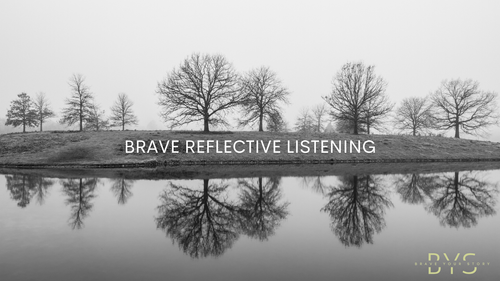
Listening in like the Tranquility of a Garden
In the tranquil setting of a garden, where willow branches sway gracefully over serene ponds and stone paths invite quiet contemplation, the art of reflective listening finds a perfect metaphor. Just as the garden's designed harmony reflects the meticulous care of its creator, reflective listening mirrors the thoughts and emotions of the speaker, allowing deeper understanding and connection. The metaphor of the tranquil garden is an example of what reflective listening can do to enhance our situational awareness and deepen our insights. The powerful co-creative coaching technique of Brave Reflective Listening, demonstrates the 5 simple steps in enabling leaders and coaches to listen deeper, which embodies the principle of listening to understand, rather than to be understood. It’s not about trying to judge what’s right or wrong but it’s about improving the quality of our listening ability. Listening is a patient process that requires practice and continuous learning and improvement.
How was the 5 Step Brave Reflective Listening Developed
The 5-Step Brave Reflective Listening technique was developed by me when I recognised a common challenge in communication: too often, individuals prepare responses or anticipate outcomes without fully listening to the speaker. This insight led to the creation of a structured listening approach that emphasizes true understanding and mutual dialogue. The foundation of this method is the concept of co-creation, a collaborative interaction where both speaker and listener work together to explore and build understanding. This approach is integral to the philosophy of "Brave Your Story, BYS" a movement aimed at empowering individuals to share their unique narratives in a setting that fosters authenticity and empathy.
This reflective listening technique was designed specifically to aid leaders and coaches who need to foster deep connections, whether in coaching sessions or everyday leadership scenarios. By implementing these five simple steps—Listen Actively, Reflect Back, Check for Accuracy, Respond Appropriately, and Encourage Continuation—leaders and coaches can enhance their ability to listen genuinely and respond effectively. The technique not only improves interpersonal communication but also helps in building trust and facilitating transformative conversations, ultimately leading to more effective leadership and coaching outcomes.

“Listen, truly listen, and the silence between words will speak the language of the soul.”
The Philosophy of Reflective Listening
Reflective listening, much like observing a landscape painting, requires a focus that extends beyond the surface to appreciate the depth of the experience. The listener, akin to a painter, observes and interprets the scene—the speaker's words and emotions—with the intent to understand and reflect the landscape of their thoughts accurately and empathetically. Also, to notice the various nuance of the landscape somethings things unseen, unheard, unspoken and unravelling the map of the world of the client.
This technique is not merely a method but a philosophy and approach that transforms conversations into opportunities for progress, growth and connection. It draws from the stories and metaphors of Asian culture to deepen the understanding of how deep listening can happen for the leader or coach. One critical element in listening is the ability to find harmony in the listening of the context and content of the client. Just like a tapestry, the intricate patterns of the client’s world is being woven in such a harmonious manner that it takes the skilled observer to appreciate and understand the stories beneath.
Understanding Reflective Listening
Normal Listening vs. Reflective Listening
Often involves hearing words and forming a response based on one's own perspective, sometimes leading to misunderstandings or superficial engagement. Usually its linear it is response.
Focuses on understanding the speaker's message from their point of view. It requires the listener to reflect thoughts and emotions expressed by the speaker, promoting deeper understanding and empathy. Multi-dimensional approach to the whole of person.
Defining Brave Reflective Listening
Brave Reflective Listening is a step beyond traditional reflective listening techniques, advocating for a courageous approach to embrace and reflect the underlying emotions and challenges conveyed by the speaker. It involves delving into the unspoken feelings and providing a space where difficult conversations can lead to transformative outcomes. Being Brave is a state of being which enables use to see, hear and feel through the layers of what is being conversed.
Why Brave Reflective Listening Benefits Coaches and Leaders
For coaches and leaders, Brave Reflective Listening serves as an invaluable tool. It enhances interpersonal relationships, fosters trust, and leads to more effective communication. Leaders who practice this form of listening are better equipped to resolve conflicts, inspire their teams, and drive meaningful changes within their organizations.
The Five Steps of Brave Reflective Listening
Developed to guide effective communication, each step serves a strategic purpose:
