

Advanced Coach Education Certification Program
The Ikigai Leadership Professional Coach — a 125-hour advanced coaching certification designed to the ICF Level 2 international standard.
Between ACC and PCC, there is not simply more to learn. There is something to become. At ACC, you coach the conversation. At PCC, you coach the person having it—working with greater emotional complexity, deeper awareness, and your own steadiness as the instrument.

The distinction
What Actually Changes Between ACC and PCC

The honest version, which is not what most program pages will tell you: the difference between ACC and PCC is not a longer list of techniques. Coaches arriving from a Level 1 program usually already know more techniques than they can use. What separates the two levels is where the coaching is aimed and how much the coach is willing to not know.
The PCC Minimums Skill Requirements and PCC Markers are the ICF's behavioral indicators for that standard, and this program is built around them. Not as a checklist to perform against, which produces stilted coaching, but as a description of what naturally shows up when a coach has stopped managing the conversation.
This program is designed to meet the ICF Level 2 Coaching Education requirements. Our accreditation application is in progress and we will not describe the program as ICF-accredited until it is granted. On completion you earn the Ikigai Leadership Professional Coach (ILPC) designation, awarded by Brave Your Story and Ikigai Kokoro Pte Ltd. The PCC is awarded by the ICF on separate application, and requires 500 logged coaching hours and the ICF credentialing exam in addition to your education.
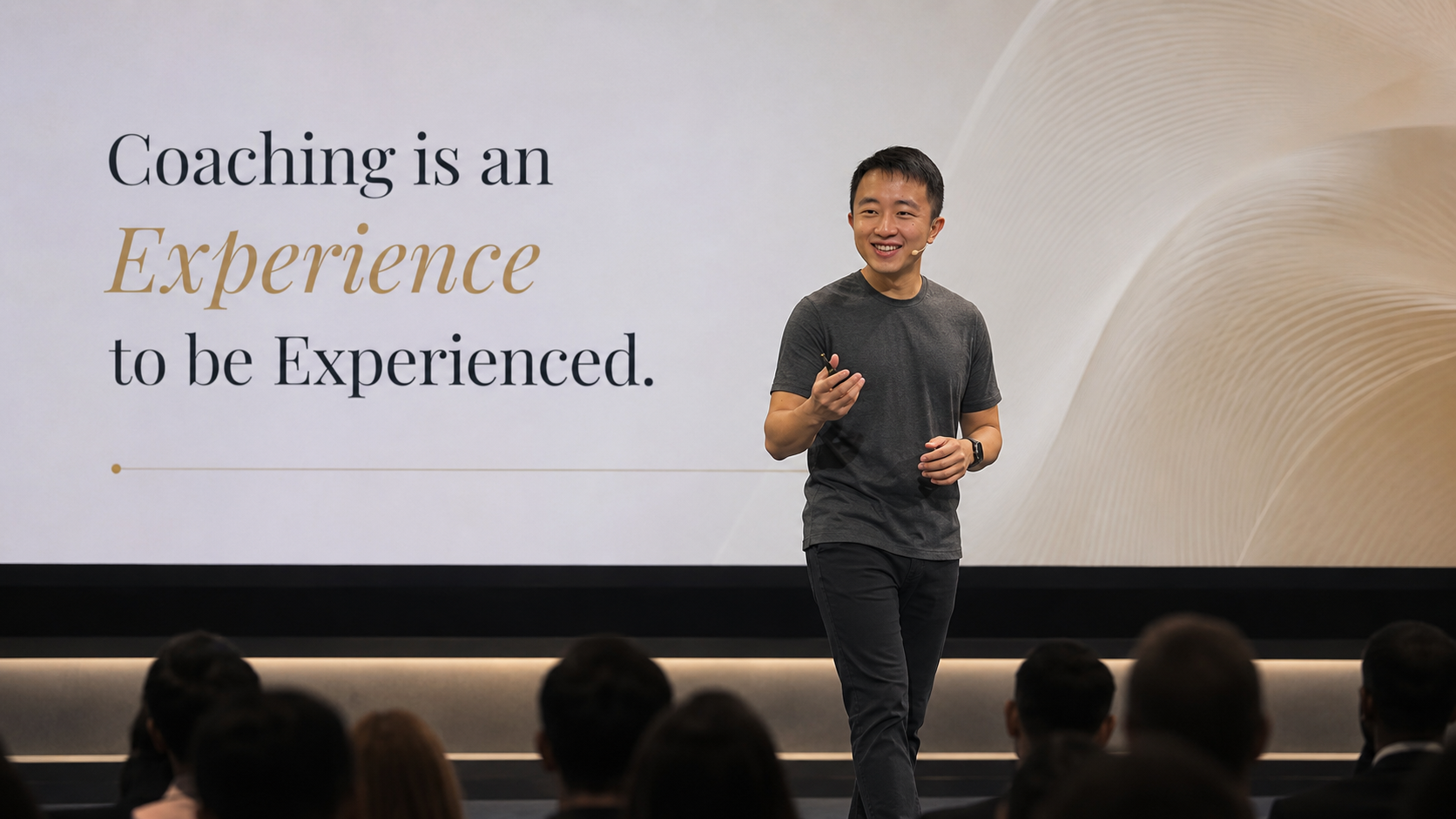
At the ACC level you coach the conversation. At the PCC level you coach the person having it.
Entry Routes
Two Ways In
Either way you complete the same Part 2 curriculum, the same mentor coaching, the same observed sessions, and the same competency review. See the Level 1 program.
Start at Part 1.
The 60-hour Certified Professional Coach program is embedded here without modification, so nothing is repeated and nothing is spent twice. You earn the CPC designation at the 60-hour mark and continue straight into Part 2.
If you are new to coaching
125 hours total · About 10 months · Two designations, CPC then ILPC
Fee: see Cohorts and Tuition
If you already hold an ACC
Enter directly Part 2.
65 hours, with your foundation confirmed at intake. This route is also open to graduates of an ICF Level 1 program with another provider.
65 hours · About 5 months · One designation, ILPC
Part 2 fee: see Cohorts and Tuition
The Coaching Approach
The LEAD™ Coaching Model, Taken Deeper
Part 2 does not pile new models. It walks and deepens the same five movements, core competencies and ethics you already know and takes each one deeper, which is why coaches arriving from other Level 1 programs settle quickly rather than starting over.
| Movement | At Level 1 you learned | At Level 2 you learn |
|---|---|---|
| Lead Outcomes | To agree an outcome and a measure | To surface the identity stake underneath the topic, and to renegotiate focus mid-session without losing the thread |
| Examine | To explore situation, belief, and feeling | To work with emotion as information, to read the body, and to track a pattern across a whole session |
| Explore & Evoke | To ask questions that open, and to work with the client's metaphor | To shift perceptual position, to work at identity and values level, and to follow emergence rather than your own idea |
| Aligned Insights | To help a client name what they learned | To trace the arc of awareness across a session and let the client arrive without narrating it for them |
| Decide & Act | To design action the client will take | To design an engagement, not a session, and to close it with grace |
Curriculum
The Four Advanced Cores
Four cores, each deepening one movement of the conversation you already know how to hold.
-
Agreements, outcomes, measures, and the ethics of complexity
Ha 破, breaking the form
Most coaching that goes nowhere went nowhere in the first eight minutes. At the PCC level the opening of a conversation is doing more work than it appears to: not just agreeing a topic, but finding what is at stake for the person in it. This core also carries the second three-hour ethics block, which is deliberately harder than the first, because the ethical questions that actually arise in professional practice are about power, competing loyalties, and money rather than about whether to keep a confidence.
By the end of this core you can
Surface the identity stake beneath a presenting topic, without forcing it when it is not there.
Contract with a sponsoring organization and a client at the same time, without quietly betraying either.
Renegotiate the focus out loud, mid-session, when the real subject arrives, and do it in a way that deepens trust rather than unsettling it.
Agree measures that mean something to the client rather than something that sounds rigorous to the sponsor.
Work through ethical complexity involving power, multiple stakeholders, dual roles, money, and the disclosure of AI use.
ICF Core Competencies: Establishes and Maintains Agreements · Demonstrates Ethical Practice
-
Thought, emotion, body, and pattern
Kokoro no Ugoki 心の動き, the movement of the heart-mind
A client tells you about a decision and their shoulders drop on the word "obviously." At the ACC level you probably miss it. At the PCC level you notice it, you decide whether to name it, and you name it in a way that does not sound like an accusation. This core is about the layer beneath the words: what someone is feeling, what their body is doing, and what keeps recurring across an hour that neither of you has mentioned yet.
By the end of this core you can
Work with emotion as information rather than as something to acknowledge and move past.
Notice what a client's body is doing and offer it back as an observation rather than an interpretation.
Track a pattern across a whole session and reflect it without turning it into a diagnosis.
Coach the interdependence of thinking, feeling, and doing, rather than treating them as separate topics.
Stay with a client's discomfort long enough for it to become useful, and know the difference between that and abandoning them in it.
Recognize when a conversation has moved beyond coaching, and make a referral cleanly.
ICF Core Competencies: Cultivates Trust and Safety · Listens Actively · Evokes Awareness
-
Perspective, metaphor, identity, and meaning
Ikigai 生きがい · Wabi-Sabi 侘寂 · Kintsugi 金継ぎ
This is the heart of the program and the largest core. Clients bring problems. Problems are usually the safest available version of the thing. Coaching at this level means being able to work with the person rather than the presenting issue: their identity, their values, what they think their life is for, and what happens to all of that when something breaks. It is also where the discipline is hardest, because the more experienced you become the more you will see, and the more tempting it becomes to say it.
By the end of this core you can
Shift perceptual position so a client can see their own situation from outside it, including from the point of view of the person they are struggling with.
Work at the level of identity and values without straying into therapy, and know precisely where that line runs.
Work with metaphor as a live instrument, including giving a client's issue a character and a voice.
Follow what emerges rather than driving your own agenda, and notice within a sentence or two when you have started driving.
Coach a client through setback, failure, and transition, treating repair as something that adds rather than restores.
Evoke a client's own felt sense of what makes their life and work worth doing, without supplying your version of it.
ICF Core Competencies: Maintains Presence · Evokes Awareness · Cultivates Trust and Safety
-
Habits, resilience, and sustainable growth
Kaizen 改善 · Gaman 我慢
At the ACC level you close a session. At the PCC level you design an engagement, which is a different skill. This core is about change that survives contact with the client's actual life: habit and motivation architecture, accountability that holds when you are not in the room, resilience that does not depend on pretending things are fine, and the ability to end an engagement well rather than letting it fade.
By the end of this core you can
Design a multi-session coaching engagement with a shape, rather than a series of unconnected good conversations.
Build habit and motivation structures that survive the engagement ending.
Support resilience without minimizing difficulty or rushing a client toward optimism.
Work with a client through a setback mid-engagement, and use it rather than working around it.
Close an engagement with grace: consolidate the learning, name what changed, and let go cleanly.
ICF Core Competencies: Facilitates Client Growth · Establishes and Maintains Agreements · Evokes Awareness
What You Will Be Able to Do
The PCC Markers describe what a coach at this level actually does. Here is what each competency looks like as something you can do, at the PCC standard.
Demonstrates Ethical Practice
Navigate ethical complexity involving power, sponsors, competing loyalties, money, and dual roles. Recognize an issue before it becomes one.
ICF Core CompetencyEmbodies a Coaching Mindset
Coach from not knowing, deliberately, including when you can see the answer. Sustain your own reflective practice and wellbeing across a full caseload.
ICF Core CompetencyEstablishes and Maintains Agreements
Contract at engagement, session, and sponsor level. Surface the identity stake beneath a topic. Renegotiate focus out loud when the real subject arrives.
ICF Core CompetencyCultivates Trust and Safety
Create enough safety for a client to say the thing they have not said to anyone. Stay with discomfort without relieving it prematurely.
ICF Core CompetencyMaintains Presence
Remain grounded, spacious, and unhurried in emotionally complex conversations. Use silence as a generative instrument rather than a gap.
ICF Core CompetencyListens Actively
Hear language, emotion, energy, body, and pattern simultaneously, and choose which to offer back.
ICF Core CompetencyEvokes Awareness
Shift perceptual position. Work at identity and values level. Follow emergence rather than your own hypothesis, and notice when you have stopped.
ICF Core CompetencyFacilitates Client Growth
Design engagements rather than sessions. Build change that outlives your involvement. Close with grace.
ICF Core CompetencyHow You Learn
At this level, learning means more than adding techniques. You practice, get observed, review real sessions, and return to the work with greater precision.

Demonstrate
Faculty coach live at PCC level, including the difficult moments.

Practice
Coach in threes and fishbowls with credentialed observation.

Record & Review
Bring real client sessions for written review against the PCC Markers.

Reflect & Return
Use recordings, journaling, and a development plan to keep improving.
What’s Included
A complete pathway combining advanced coaching development with structured ICF credential preparation.
Coaching Development
125 hours of coach-specific training
11 observed coaching sessions
Advanced practicum & fishbowl coaching
Ethics, workbooks & reflective practice
Membership of The Coaching Mastery Group
Credential Preparation
125 hours toward the ICF Level 2 education requirement
20 hours of mentor coaching
6 recorded client sessions reviewed
Competency Reviews across the pathway
ICF application & credentialing exam guidance

Mentor Coaching and Assessment at the PCC Level
Across the full pathway you receive twenty hours of mentor coaching, ten in each part, from a mentor coach who holds the ICF Mentor Coach Specialization at the PCC level. At least eight of those hours are one to one.
The mechanism is the same as at Level 1 but the standard is different. You record full sessions with real clients. Your mentor coach reviews each one in advance against the PCC Markers, writes a formal Session Observation Form, and then works through it with you. The gap between what you intended and what a trained observer heard is where the development happens, and at this level that gap is usually about restraint rather than skill.
At the close of each part your mentor coach completes a cumulative Competency Review across all your observed sessions, moderated internally by our Lead Mentor Coach Educator.
Optional Extension
The Team & Systems Add-On
Twenty-five further hours, optional, for coaches whose work extends beyond the individual. Its guiding idea is Wa (和), harmony within a system without erasing the individual inside it, which is precisely the problem team coaching has to solve.
Graduates earn the Ikigai Team & Systems Leadership Coach (ITSLC) designation.
The add-on supports progression toward the ICF Advanced Certification in Team Coaching. It can be taken alongside Part 2 or later,
Team & Systems Leadership Coaching
Explore the difference between team coaching and group facilitation, multi-stakeholder ethics, team dynamics, psychological safety at group level, sponsor contracting, and observed team coaching with written feedback.
12.5 HOURS
Reflective Coaching Supervision
Grounded in the ICF Coaching Supervision Competency Model. The difference between supervision, mentor coaching, and coaching. The restorative, normative, and formative functions. Establishing a supervision relationship, working with bias, and facilitating group supervision.
12.5 HOURS
Your pathway to the PCC credential
Where the pathway goes
Shu, Ha, Ri is the Japanese description of how mastery develops: keep the form, break the form, transcend the form.
Mastery is not the finish line. It is the path itself.
— Jedidiah Alex Koh, MCC
Learn From Credentialed Experts
At Level 2, you learn from Master Certified Coaches who practice at the highest level and mentor with distinction.
Lead Faculty
Jedidiah Alex Koh, MCC, ACTC
Founder and Director QI Coach Education
A Master Certified Coach, the ICE's highest credential, held by a small fraction of coaches worldwide. and an ICF Advanced Certified Team Coach, Author Of the LEAD series,
Every Faculty member teaching ICF competency and mentoring holds an ICF credential
Every mentor coach additionally holds the ICF Mentor Coach Specialization at the PCC level.
Excellence in coaching begins with those who teach it.
Frequently asked
Frequently Asked Questions
On credentials, hours, the evaluation process, and what ikigai actually means.
-
The ACC and PCC are the first two credential levels awarded by the International Coaching Federation, and the difference is depth rather than volume. At the ACC level you demonstrate the full set of coaching competencies. At the PCC level you demonstrate them under complexity: with emotion in the room, with the client's identity at stake, and while following what emerges rather than driving toward your own idea of the answer. The ICF assesses that standard through the PCC Markers.
-
Yes. Coaches holding an ACC, or who have completed an ICF Level 1 program with any provider, may enter directly at Part 2 with their foundation confirmed at intake. Part 2 is 65 hours and includes its own mentor coaching, observed sessions, and competency review.
-
The ICF requires 125 hours of coach-specific education, 500 hours of client coaching experience, 10 hours of mentor coaching over at least three months, and a pass in the ICF credentialing exam. This program covers the education and provides 20 hours of mentor coaching, exceeding that requirement. The 500 coaching hours are yours to accumulate, and we show you how to track them from your first month.
-
About ten months for the full 125-hour pathway, or about five months entering at Part 2. The ICF requires a minimum of three months of mentor coaching per level, and skill at this level develops through sustained practice, so the pace is deliberate rather than intensive.
-
The program is designed to meet the ICF Level 2 Coaching Education requirements and our accreditation application is in progress. We will not describe it as ICF-accredited until accreditation is granted. The ILPC designation is awarded by Ikigai Kokoro; the PCC credential is awarded by the International Coaching Federation on separate application.
-
No. The program uses a formative evaluation process, so your development is evidenced across many observed and recorded sessions over several months rather than in one assessed recording. Your mentor coach completes a cumulative competency review at the close of each part, which is moderated internally before certification.
-
No. The philosophy is the root, not a script. It shapes how the program is structured and taught, and most graduates never say the word ikigai to a client. What they carry out of it is the quality of attention it produces.
-
Ikigai is a Japanese word for that which makes life worth living, and it has two faces: the source of meaning, and ikigai-kan, the felt sense within that life is worth living. It is not the four-circle Venn diagram of what you love, what you are good at, what you can be paid for, and what the world needs. That diagram is not Japanese; it was created by a Western writer in 2011 and attached to the word afterwards. We teach the concept as the psychiatrist Mieko Kamiya described it in 1966.
Between ACC and pcc, there is something to become.
Three ways to take your next step. Choose the path that fits where you are —and where you're going.

1
Book a discovery call.
Twenty minutes with a member of faculty, no pitch.
2
Download the program guide.
Full curriculum, schedule, and fee structure for all three configurations.
3
Apply for the
next cohort.