
DEEP Listening - The Coaching Inquiry Framework to Enhance Coaching Conversations
“Deep inquiry is not just about asking questions; it’s about unlocking the doors of perception and understanding.”
Introduction
In the dynamic field of coaching, the ability to ask powerful, transformative questions is paramount. It's not just about what you ask, but how and when you ask it. This is where the DEEP Inquiry Framework comes into play, a revolutionary approach designed to take your coaching conversations to new depths. Whether you're a seasoned coach or just starting, the DEEP Inquiry Framework provides a structured yet flexible method to understand your clients on a profound level and facilitate their journey towards self-discovery and growth.
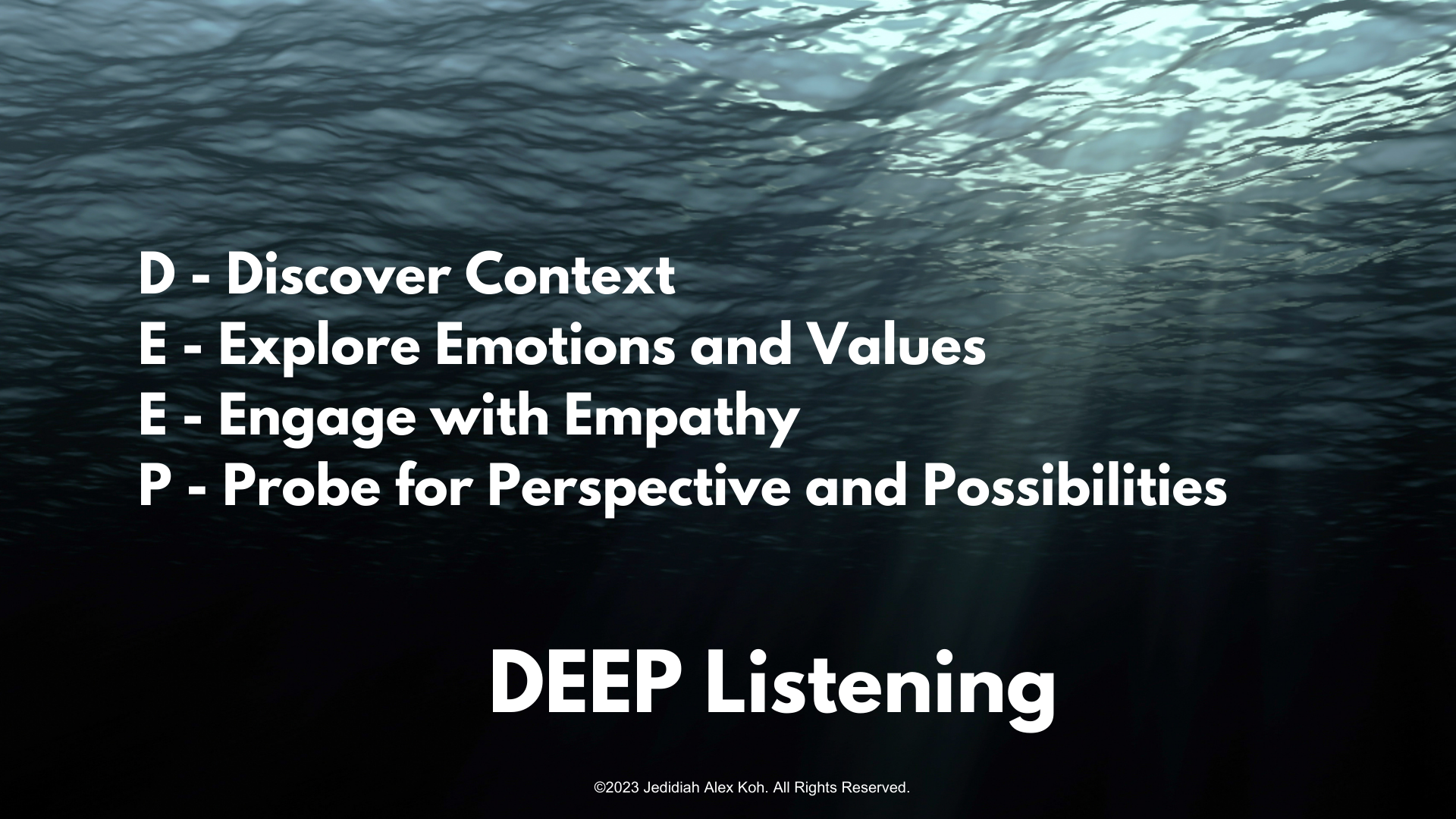
1. Discover Context
Every effective coaching session begins with a solid understanding of the client's background and current context to lay the groundwork for a meaningful dialogue.
2. Explore Emotions & Values
Delve deeper into the client's emotional landscape and core values to build an empathetic connection and bring clarity to the process.
3. Engage with Empathy
Build a stronger rapport by demonstrating active listening, genuine empathy, and deep understanding of the client's experience.
4. Probe for Possibilities
Open new avenues for exploration by shifting the focus toward broader perspectives, fresh angles, and future opportunities.
Implementation in Coaching Sessions
Implementing the DEEP Inquiry Framework isn’t a linear process. It’s flexible and can be adapted to each unique coaching session. The key is to seamlessly transition between phases, keeping the client's needs and responses in mind.
Advanced Exercises for Coaches
To master the DEEP Inquiry Framework, practice is crucial. Engage in role-playing exercises, keep a reflective journal, and seek feedback from peers or mentors. Each interaction offers an opportunity to refine your skills.
Integrating DEEP Inquiry with ICF Core Competency 6: Tailoring Questions to the Client’s Unique Context
A crucial aspect of the DEEP Inquiry Framework is its alignment with the ICF's Core Competency 6, especially the PCC marker 6.1, which emphasizes the customization of a coach’s questions and observations based on their understanding of the client’s identity and situation.
Personalized Approach in Discover & Explore Phases. In the Discover and Explore phases of DEEP, coaches gather detailed information about the client’s background, emotions, and values. This process directly supports CC6, particularly marker 6.1, as it enables coaches to tailor their questions and observations to the specific context and identity of the client. By delving deeply into the client’s personal narrative, coaches are better equipped to formulate questions that resonate on a personal level, enhancing the relevance and impact of the coaching conversation.
Enhancing Coach’s Effectiveness. This personalized approach is fundamental in effective coaching. It ensures that the coaching session is not just a generic dialogue but a targeted exploration tailored to the client's unique journey. This not only deepens the client’s self-awareness but also fosters a stronger coach-client relationship, a cornerstone of successful coaching outcomes.
Practical Application in Our Classes. In our training sessions, we focus on developing the skill of customizing questions and observations as per marker 6.1. Through practical exercises, coaches learn to interpret the nuances of their client's communication, aligning their inquiries and feedback with the client's distinct needs and objectives. This not only meets the standards set by the ICF but also elevates the coach's ability to facilitate meaningful change.
By integrating the DEEP Inquiry Framework into your coaching practice, you align with the core principles of ICF Competency 6, specifically marker 6.1, ensuring your coaching is as impactful and client-centered as possible. Join our classes (Co-Creative Coaching) to explore this framework in depth and learn how to craft personalized, effective coaching conversations that resonate with and empower your clients.
The DEEP Inquiry Framework is more than just a tool; it's a pathway to deeper, more impactful coaching conversations. It guides coaches to not only understand their clients better but also to empower them to unlock their full potential. In adopting this framework, you'll be equipped to facilitate transformative growth in your clients and stand out in the coaching field.
“Each client is a unique story waiting to be deeply understood. As coaches, we are the scribes of unseen chapters, helping to reveal their narrative.”
